Draft
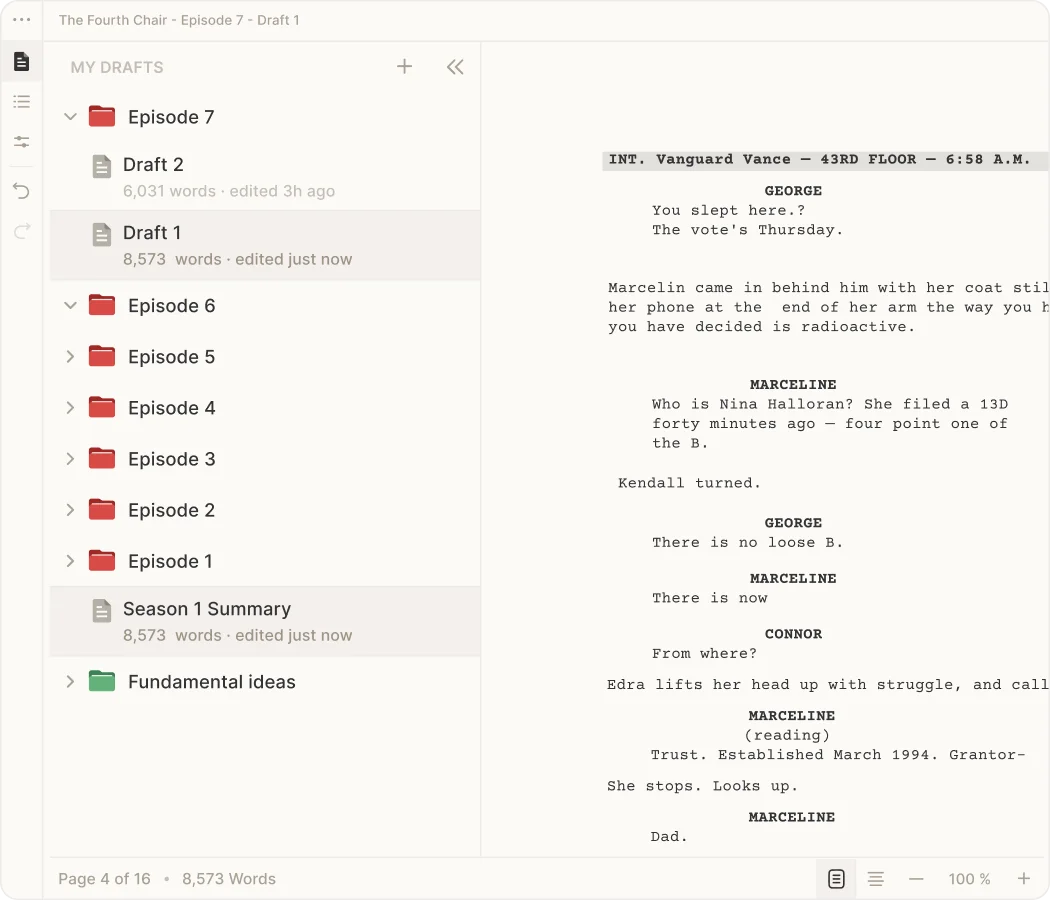
Where you write each chapter, and it knows what came before. Previous chapter, character notes, and planned beats stay beside your manuscript.
Releasing weekly on Substack, Royal Road, or anywhere else? Skrib keeps your chapters organized, plot threads clear and your release schedule on track.
Free to start · Your work stays yours

Google Docs, Notion, and Word are fine for essays, but serialized fiction creates friction at every turn. A chapter buried five folders deep. A character timeline in a separate document. The longer your serial runs, the messier it gets. Skrib is built for writers releasing chapters in sequence, tracking arcs across dozens of releases, everything in one studio.
Where you write each chapter, and it knows what came before. Previous chapter, character notes, and planned beats stay beside your manuscript.
Your entire serial, visually. Map character arcs, track plot threads across chapters, and plan your release schedule weeks or months ahead.
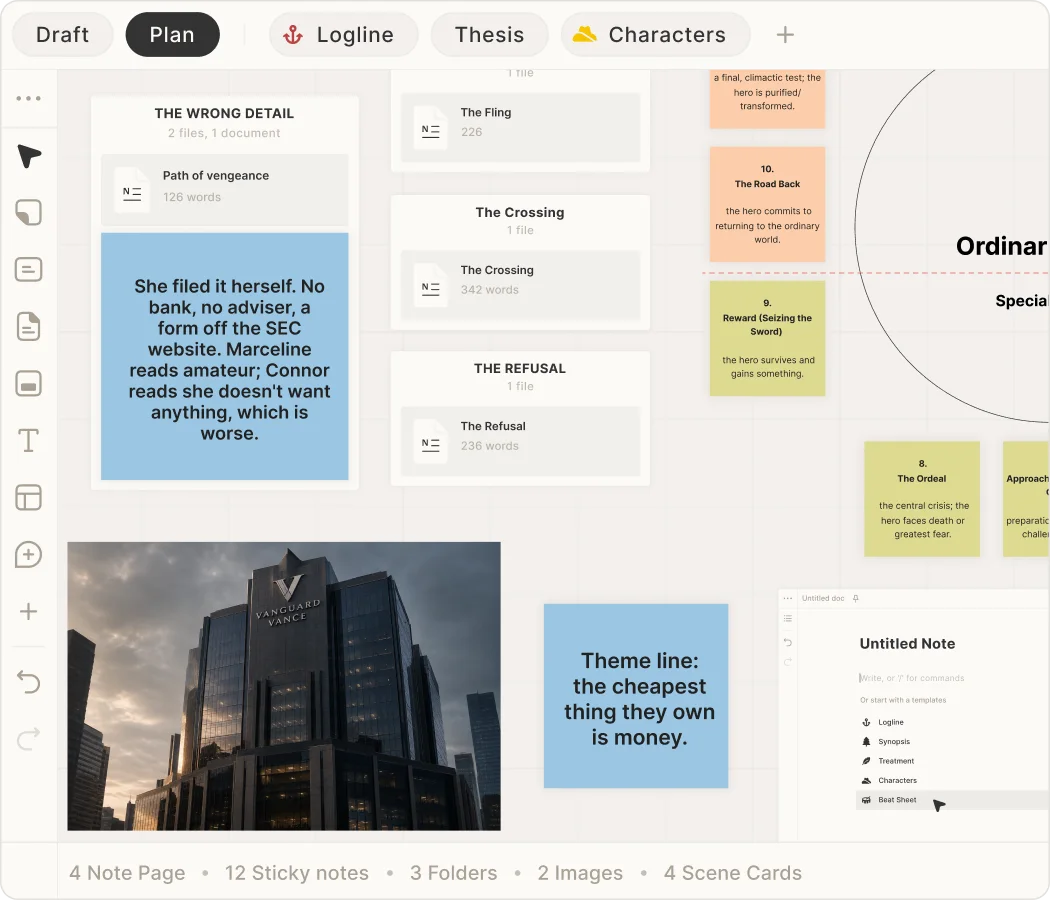
Character profiles, world details, chapters in progress, completed archives. On chapter 87 and need a detail from chapter 12? Find it in seconds.
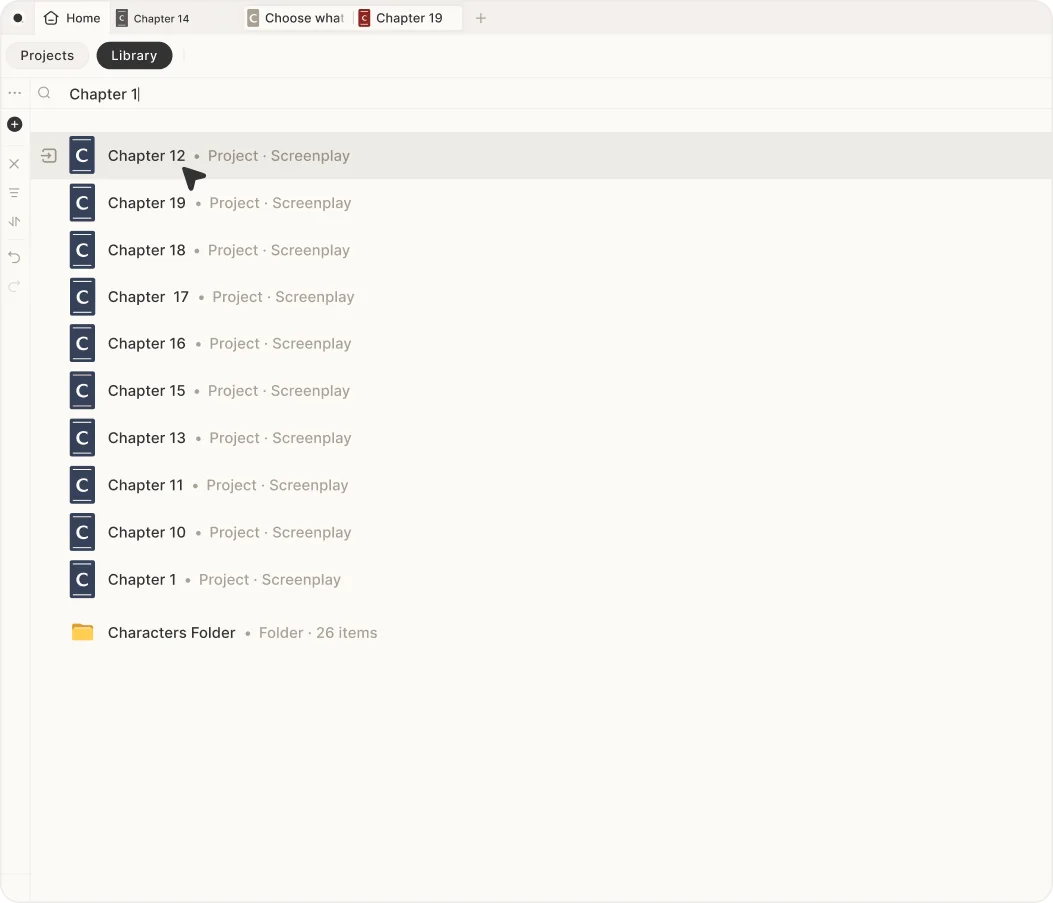
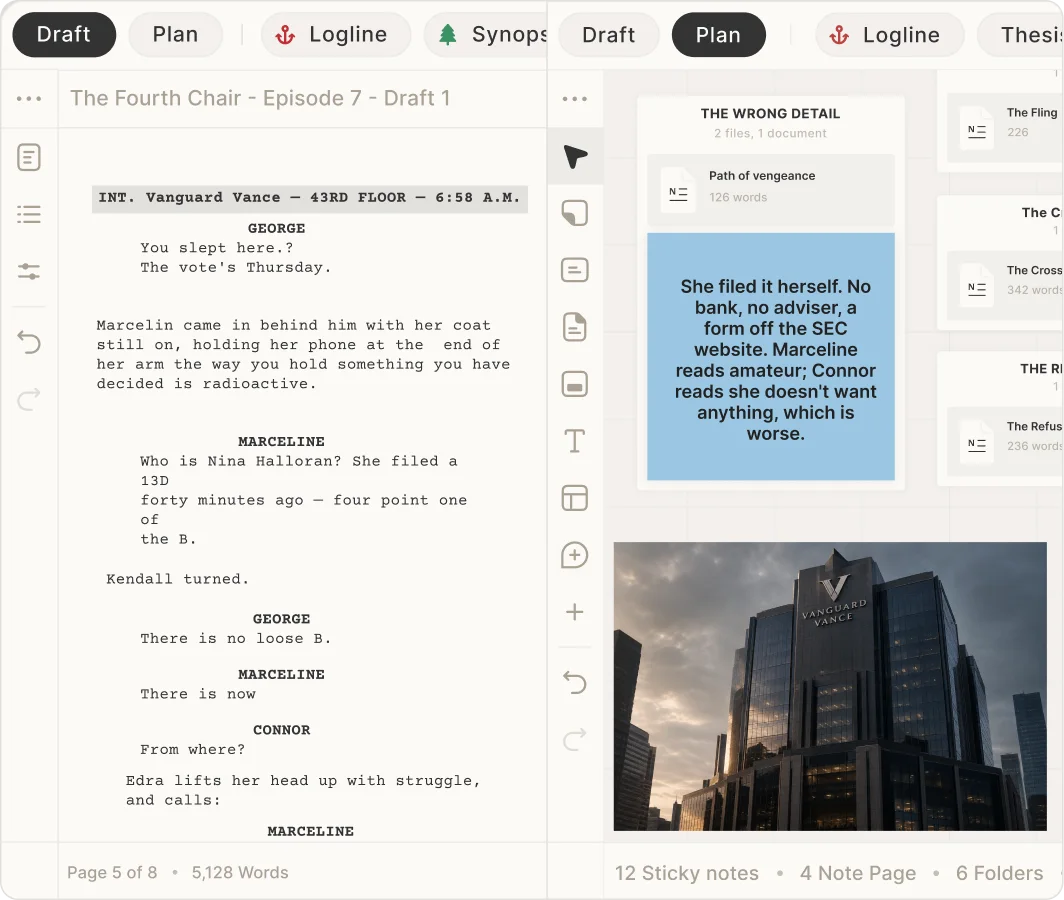
Weekly releases on Substack create relentless pressure. Plan three months ahead on Board, keep your backlog visible in Draft, and see which chapters need work before your next deadline. Writers stay two to three weeks ahead, turning weekly publication from a scramble into a rhythm.
A detail from chapter 14 contradicts chapter 58. An eye color shifts mid-arc. In Skrib's Library, character profiles stay linked to relevant chapters and plot notes flag conflicts before you publish. That is the difference between confused readers and loyal fans.
Most serial writers juggle three or four stories across platforms. Each serial gets its own Draft, Board, and Library, so you move between them without losing your place. Two Substack serials and a Royal Road story in one afternoon, no context switch.
As your serial grows, early chapters become archaeology. Readers reference events from months ago, and you need to recall what it set up. Library keeps chapters and notes interlinked, and Board shows how each one connects. Your backlog isn't a graveyard; it's a resource.
The short answers writers tend to ask first.
Skrib works for any longer fiction project, but it's built with serial writers in mind. If you write one-off short stories, a general text editor works fine. If you're planning a novel series or writing episodic fiction over months, Skrib's structure pays dividends. Most users find it fits their process whether they're publishing serially or writing a novel in chapters.
Yes. Skrib is a writing studio, not a publishing platform. You write and organize in Skrib, then publish through your chosen platform. The Companion tracks your release schedule, reminds you of upcoming deadlines, and keeps your notes organized as you move between platforms.
Your entire studio syncs across desktop, tablet, and phone. Write a chapter opening on your laptop, polish it on your phone while commuting, review character notes on your tablet. Your Draft, Board, and Library stay current everywhere.
Yes. You can share your Board with beta readers for feedback, invite collaborators to specific chapters, or keep your Library private while sharing your release schedule with your audience. Permissions stay granular.
Skrib offers a free tier that covers single serials and basic features. Paid plans unlock multiple simultaneous serials, unlimited collaborators, and advanced Board customization. Most serial writers start free and upgrade when they move to their second or third active serial.
Still have a question? Visit the Help Center
