Skrib

Book Writing for Novelists

Plan, draft and keep every version of your book in one studio. Book writing built for long work, not office memos. Free to start, no credit card.

Skrib96 elements11479
This template includes both a Plan and a Draft

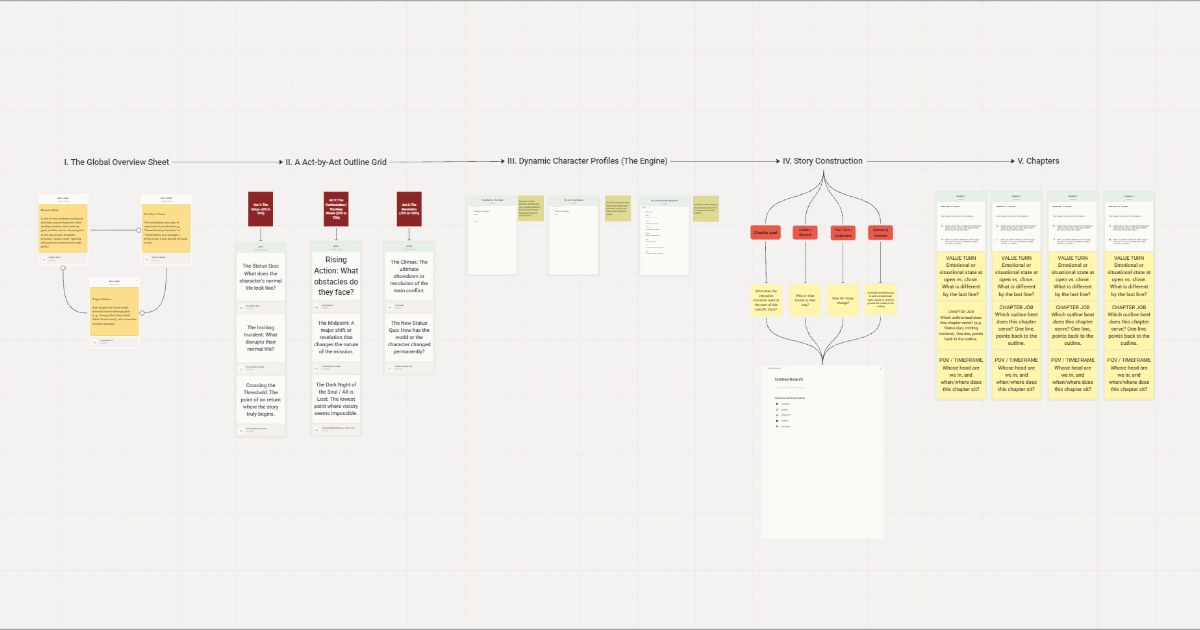
Chapters

Chapter 1

Chapter job: which outline beat does this chapter serve?

POV / timeframe: whose head, when and where.

Scene - what the viewpoint character wants at the start; who or what stands in their way; one dominant sight, sound, or smell.

Value turn: what is different by the last line.

Open questions: only what is blocking this chapter.

(leave empty writing space)

Chapter 2

Chapter job: which outline beat does this chapter serve?

POV / timeframe: whose head, when and where.

Scene - what the viewpoint character wants at the start; who or what stands in their way; one dominant sight, sound, or smell.

Value turn: what is different by the last line.

Open questions: only what is blocking this chapter.

(leave empty writing space)

Chapter 3

Chapter job: which outline beat does this chapter serve?

POV / timeframe: whose head, when and where.

Scene - what the viewpoint character wants at the start; who or what stands in their way; one dominant sight, sound, or smell.

Value turn: what is different by the last line.

Open questions: only what is blocking this chapter.

(leave empty writing space)

Chapter 4

Chapter job: which outline beat does this chapter serve?

POV / timeframe: whose head, when and where.

Scene - what the viewpoint character wants at the start; who or what stands in their way; one dominant sight, sound, or smell.

Value turn: what is different by the last line.

Open questions: only what is blocking this chapter.

(leave empty writing space)

[Working Title]

Elevator Pitch

One to two sentences: your protagonist, their inciting incident, their primary goal, and the stakes. Keep this at the top to prevent scope creep.

Core Theme

The underlying message or argument of the book (e.g. "Greed destroys families"). Every major event should tie back to this.

Target Metrics

Target word count, reader demographic, and deadline.

Character Engine: [Protagonist Name]

  • Wants: what they are chasing, out loud.

  • Needs: what they actually need, underneath.

  • The Lie They Believe: the false worldview they hold at the start, usually born from a past wound.

  • Wound: the thing in their past that drives them.

  • Flaw: what gets in their own way.

  • Voice: how they talk, and what they would never say.

  • Arc: who they are at the start, who they are at the end.


Act I

The Status Quo

What does the character's normal life look like?

Ground the reader with one dominant sight, sound, or smell.

(leave empty writing space for the scene)

The Inciting Incident

What disrupts their normal life?

What does the viewpoint character want at the start of this scene?

(leave empty writing space)

Crossing the Threshold

The point of no return where the story truly begins.

Ground the reader with one dominant sight, sound, or smell.

(leave empty writing space)


Act II

Rising Action

What obstacles do they face? Who or what stands in their way?

What does the viewpoint character want at the start of this scene?

(leave empty writing space)

The Midpoint

A major shift or revelation that changes the nature of the mission.

Ground the reader with one dominant sight, sound, or smell.

(leave empty writing space)

The Dark Night of the Soul - All Is Lost

The lowest point, where victory seems impossible.

What does the viewpoint character want at the start of this scene?

(leave empty writing space)


Act III

The Climax

The ultimate showdown or resolution of the main conflict.

Ground the reader with one dominant sight, sound, or smell.

(leave empty writing space)

The New Status Quo

How has the world or the character changed, permanently? How do things change?

What does the viewpoint character want at the start of this scene?

(leave empty writing space)
Book Writing for Novelists template

Writing a book is a two-year memory problem.

The writing itself is only part of it. The rest is remembering what you decided in chapter four, finding the research you read in March, and knowing which of nine files is the current draft. Most people do this with a word processor, a notes app and a folder - three tools that don’t know about each other. Skrib is one studio where planning, drafting and research sit on the same page.

What’s in the studio

Six things, built for a project measured in years rather than afternoons.

• Draft: A real editor with multiple drafts, block-based editing and navigation that works at four hundred pages.

• Board: An infinite canvas for chapters, arcs, characters and beats - the plan, visible, beside the writing.

• Library: Every version, note, source and file, searchable months later. Nothing is ever overwritten.

• Templates: Book plans, character profiles, world bibles and story structures, ready to drop onto the Board.

• Export: .docx for your editor, .md for your own pipeline, .pdf for beta readers, .fdx and .fountain if the book turns into something else.

• HAAS: A cryptographic record of the writing as it happens, so you can prove the work is yours.

Why write your book in Skrib?

You already have a word processor. This is what it doesn’t do.

• The Plan Doesn’t Fall Behind the Book: Open a chapter card on the Board and write the chapter in the Draft. Change one and the other stays connected.

• Nothing Gets Lost: The chapter you cut in draft two is still in your Library when draft five proves you were wrong to cut it. • Research Lives Beside the Page: PDFs, spreadsheets, images and interview notes sit in the same project as the manuscript that cites them.

• Built for Length: Word count targets per chapter and across the book, so progress is a number on the days it doesn’t feel like one.

• Import What You’ve Started: Bring an existing manuscript in as a Draft and keep going. Your work is never held hostage - it exports back out any time.

• We Don’t Train on Your Book: No scraping, no selling, no AI trained on your manuscript. Ever. Free to start, with a full studio on the free plan. Pro from $6 a month, or pay once for Lifetime.

Who is Skrib for?

• First-Time Novelists who need a structure that holds for the year the book takes.

• Career Authors running several books and deadlines at once.

• Non-Fiction Authors planning chapters, arguments and sources in the same place.

• Self-Published and Serial Authors tracking releases, threads and a hundred installments.

• Memoirists shaping a life into an arc rather than a chronology.

• Ghostwriters working to a brief with a structure that survives client feedback.

Write like you mean it

Start free, bring your manuscript, and keep every word of it.

Open Book Writing for Novelists in your own studio

Free to start. Rename it, cut it, build on it — it is yours from the first click.

More templates

Story Outline & Research Template for Writers board previewPlanDraft
Writing process

Story Outline & Research Template for Writers

Keep your outline, characters, and sources on one page. Skrib's free story outline and research template holds the whole book - and the draft sits beside it.

5 elements1.8k300