MLA Format Essay Template
MLA is a set of rules about giving credit. Everything else is your argument.
Which is why it’s frustrating that the format eats so much of the week. The rules themselves take ten minutes to learn; the time goes on assembling a Works Cited from a folder of half-remembered sources at eleven at night. Skrib’s answer is to keep the sources in the same place as the essay - every reading in your Library, every citation attached to the paragraph that uses it, built as you go rather than reconstructed at the end.
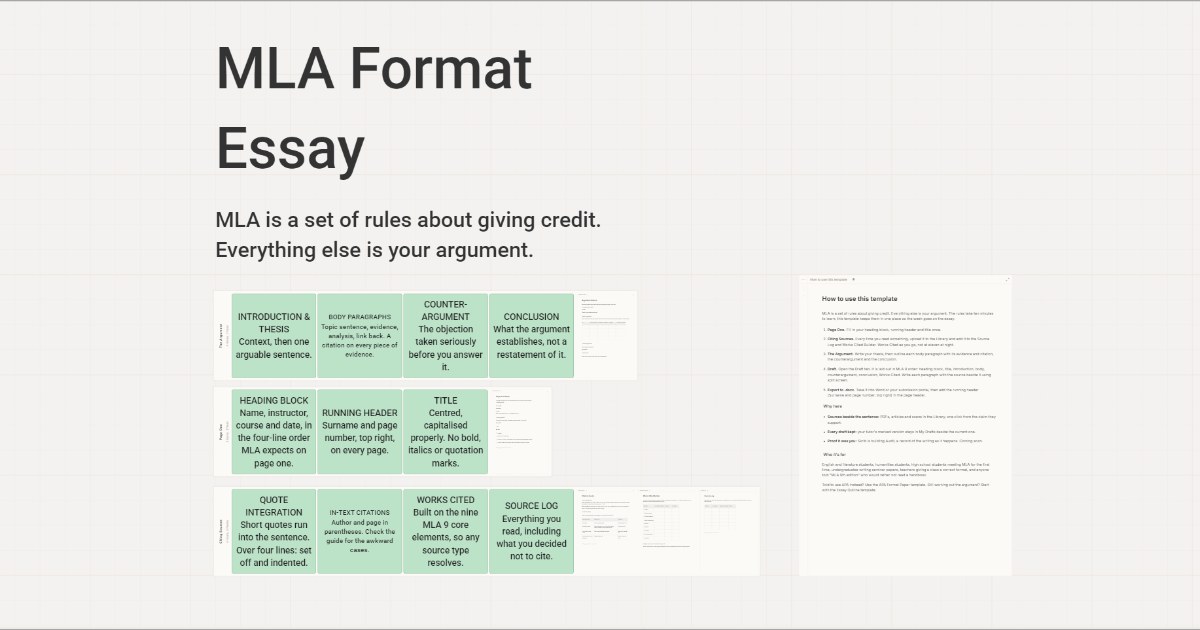
Ten sections in MLA 9 order, plus the Works Cited structure.
• Heading Block: Your name, instructor, course and date, in the four-line order MLA expects on page one.
• Running Header: Surname and page number, top right, on every page.
• Title: Centred, capitalised properly, with no bold, italics or quotation marks - the thing most people get wrong.
• Introduction & Thesis: Context, then one arguable sentence.
• Body Paragraphs: Topic sentence, evidence, analysis and the link back, with an in-text citation slot on every piece of evidence.
• Quote Integration: Short quotations run into the sentence; block quotations over four lines set off and indented. Both laid out correctly.
• In-Text Citations: Author and page number in parentheses, with prompts for the awkward cases - no author, no page, two works by one writer.
• Counterargument: The objection taken seriously before you answer it.
• Conclusion: What the argument establishes, not a restatement of it.
• Works Cited: Built on MLA 9’s core elements - author, title of source, title of container, contributors, version, number, publisher, date, location - so any source type resolves.
• Source Log: Everything you read, including what you decided not to cite.
Why write your MLA essay in Skrib?
Every other MLA resource is a specification. This is a place to write.
• Sources Beside the Sentence: Upload PDFs, articles and scans to the Library and keep them one click from the claim they support.
• Works Cited As You Go: Log each source when you read it, so the last hour before the deadline isn’t spent rebuilding a bibliography from browser history.
• Outline on the Board, Write in the Draft: Map the argument as cards, then open one and write the paragraph properly.
• Every Draft Kept: Your tutor’s marked version from three weeks ago is still there, searchable, beside the current one.
• Export to .docx: Take it into Word or your submission portal with the structure already right.
• Proof It Was You: Skrib is building HAAS - a record of the writing as it happens, so authorship is something you can demonstrate rather than argue.
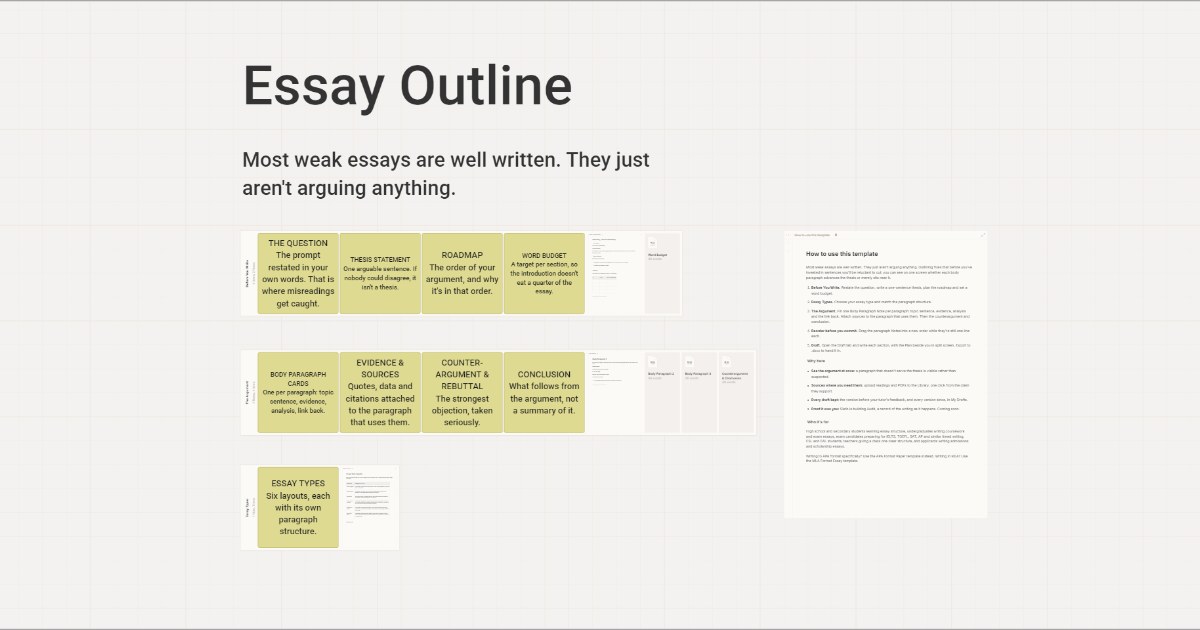
Told to use APA instead? Use the APA format paper template. Still working out the argument? Start with the essay outline template.
• English and Literature Students for whom MLA is the default and always will be.
• Humanities Students in history, philosophy, languages, art history and cultural studies.
• High School Students meeting MLA formatting for the first time.
• Undergraduates writing seminar papers and coursework essays.
• Teachers and Instructors giving a class a correct format to work in rather than a link to a style guide.
• Anyone who has been told “MLA 9th edition” and would rather not read a handbook.
Drop the template on your Board, put your sources in the Library, and spend the week on the argument instead.