Book Template
Most books die in the gap between the plan and the page.
You outline in one app, keep character notes in another, and write in a third - and by chapter nine the outline no longer describes the book you’re writing. Skrib closes the gap. The plan lives on a Board, the manuscript lives in the Draft beside it, and changing one doesn’t orphan the other.
What’s in the book template
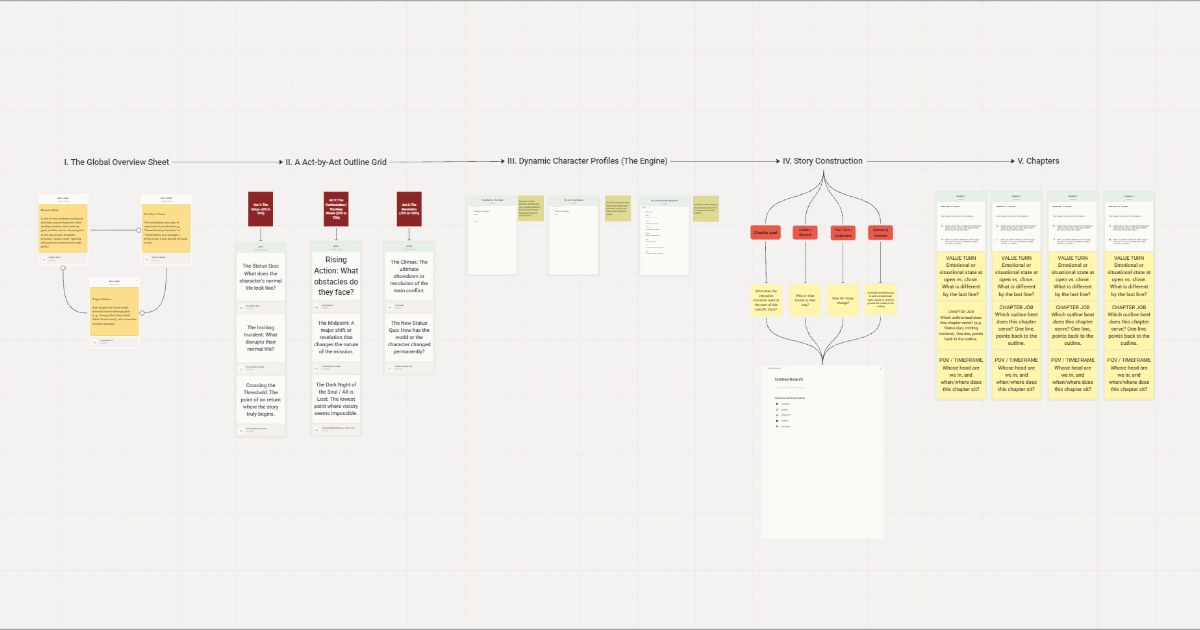
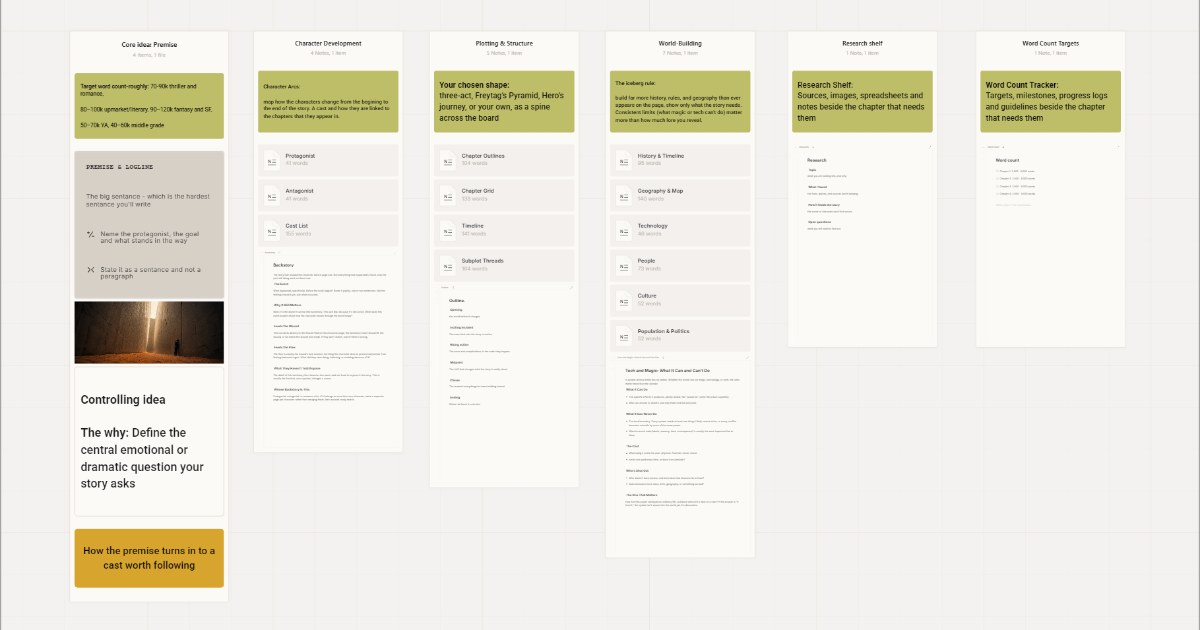
Everything a book needs before chapter one, laid out as editable cards on your Board.
• Premise & Logline: The book in one sentence, which is the hardest sentence you’ll write.
• Theme & Argument: What the book is actually about underneath the plot.
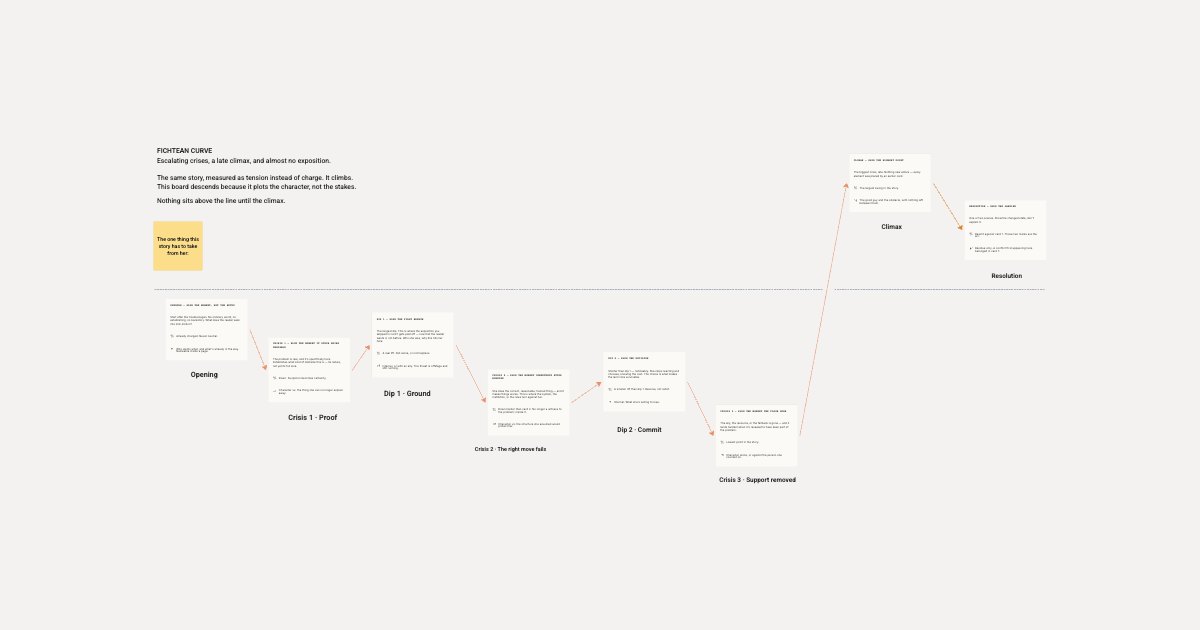
• Structure: Your chosen shape - three-act, Freytag’s Pyramid, hero’s journey or your own - as a spine across the Board.
• Chapter Grid: Every chapter as a card with a purpose, a POV and a target word count.
• Scene Cards: Break any chapter into scenes without leaving the plan.
• Character Roster: The cast, linked to the chapters they appear in.
• Setting & World: Places, rules and details, kept consistent from page one to page four hundred.
• Timeline: What happens when, including the parts that happened before the book starts.
• Subplot Threads: Colour-coded lines you can follow to make sure each one resolves.
• Research Shelf: Sources, images, spreadsheets and notes in your Library, beside the chapter that needs them.
• Word Count Targets: Per chapter and total, so “finished” is a number and not a feeling.
• Revision Checklist: What to fix in draft two, written down while you’re still in draft one.
Why plan your book in Skrib?
Writing a book is a two-year memory problem. Software should carry some of it.
• The Whole Book on One Board: Infinite canvas, so a four-hundred-page manuscript is still legible as a shape.
• Plan and Draft Side by Side: Open a chapter card and write the chapter. The plan updates with the book instead of falling behind it.
• Nothing Gets Lost: Every outline, note, deleted chapter and old version stays in your Library, searchable months later.
• Track the Distance: Word counts per chapter and across the book, so progress is visible on the days it doesn’t feel like progress.
• Export Clean: .docx for your editor, .md for your own pipeline, .pdf for a beta reader.
• It Stays Yours: We don’t scrape, sell, or train AI on your manuscript. Whether it’s your first book or your ninth, the difference between finishing and stalling is usually whether you could still see the whole thing.
Who is this book template for?
• First-Time Novelists who need a structure to hold the year the book takes.
• Non-Fiction Authors planning chapters, arguments and sources together.
• Self-Published and Serial Authors running multiple books and release schedules.
• Memoirists shaping a life into an arc rather than a chronology.
• NaNoWriMo Writers planning in October so November is only typing.
• Ghostwriters working to someone else’s brief with a structure that survives feedback.
Start the book properly
Drop the template on your Board, fill in what you know, and let the rest come as you write.