[Working Title]
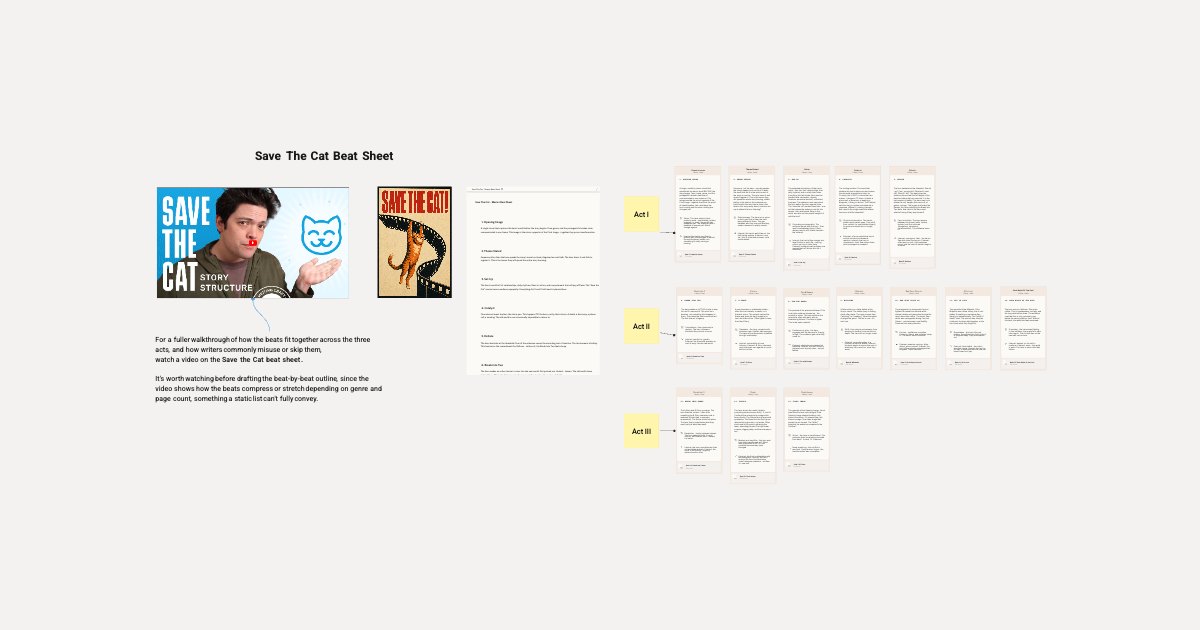
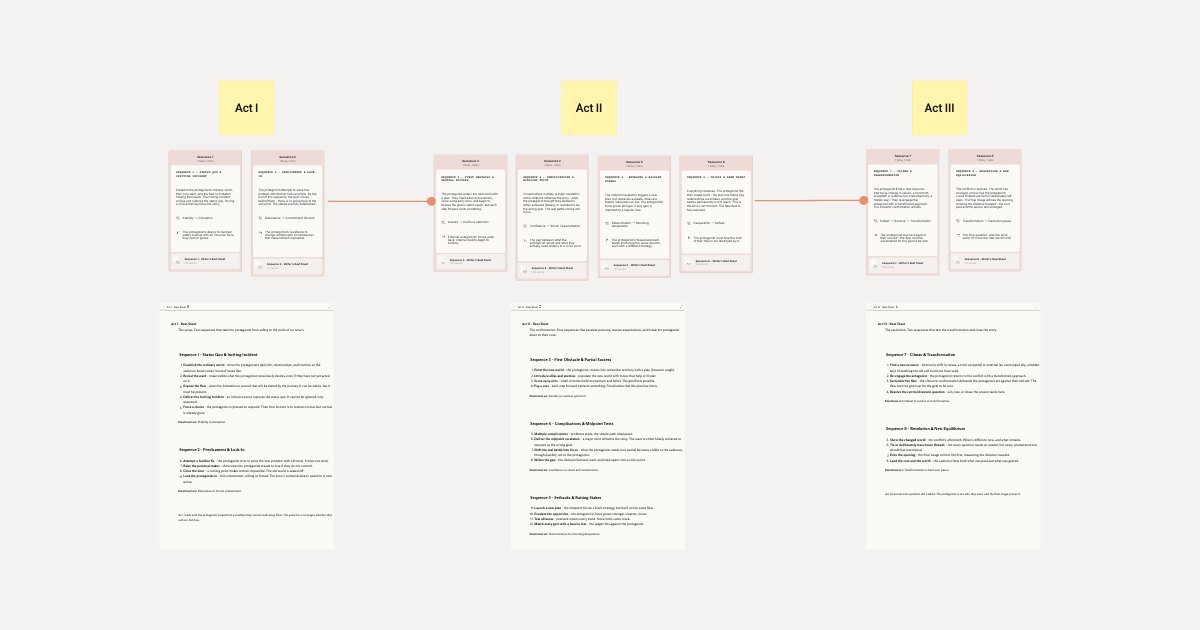
A Save the Cat beat sheet adapted for the novel, 15 beats mapped to chapters/sections, to be filled in as the story develops.
1. Opening Image
A single scene or image establishing the protagonist's world before the story begins — the mirror of the Final Image. Emotional shift: Stasis. Conflict: Internal — flaw present but unchallenged; External — world seems stable. Chapter/pages: (to be assigned) Notes: —
2. Theme Stated
Someone other than the protagonist states the story's deeper truth, almost in passing; the protagonist doesn't register it. Emotional shift: Obliviousness. Conflict: Internal — worldview vs. the stated truth. Chapter/pages: (to be assigned) Notes: —
3. Set-Up
Full introduction of the protagonist's world, relationships, routines, and flaws; everything that pays off later gets planted here — the "save the cat" moment that earns the reader's sympathy. Emotional shift: Grounding and sympathy. Conflict: Internal — flaw creates low-level friction; External — small problems seeded for later. Chapter/pages: (to be assigned) Notes: —
4. Catalyst
The inciting incident — something that happens TO the protagonist, not a choice, shattering the status quo. Emotional shift: Shock and disruption. Conflict: External — force arrives; Internal — protagonist poorly equipped to respond. Chapter/pages: (to be assigned) Notes: —
5. Debate
The protagonist hesitates at the threshold, weighs the cost, tries to refuse or bargain. Emotional shift: Fear and doubt. Conflict: Internal — courage vs. fear; External — pressure mounts. Chapter/pages: (to be assigned) Notes: —
6. Break into Two
An active choice to enter the new world or situation — not something that happens to them. Emotional shift: Commitment. Conflict: Internal — comfort vs. growth; External — cost of entry. Chapter/pages: (to be assigned) Notes: —
7. B Story
A new relationship enters — love interest, mentor, or foil — carrying the theme. Emotional shift: Openness. Conflict: Internal — vulnerability; External — this character may have their own agenda. Chapter/pages: (to be assigned) Notes: —
8. Fun and Games
The promise of the premise delivered — protagonist in the new world, early wins and entertaining failures. Emotional shift: Excitement and engagement. Conflict: External — obstacles present but beatable; Internal — flaw papered over. Chapter/pages: (to be assigned) Notes: —
9. Midpoint
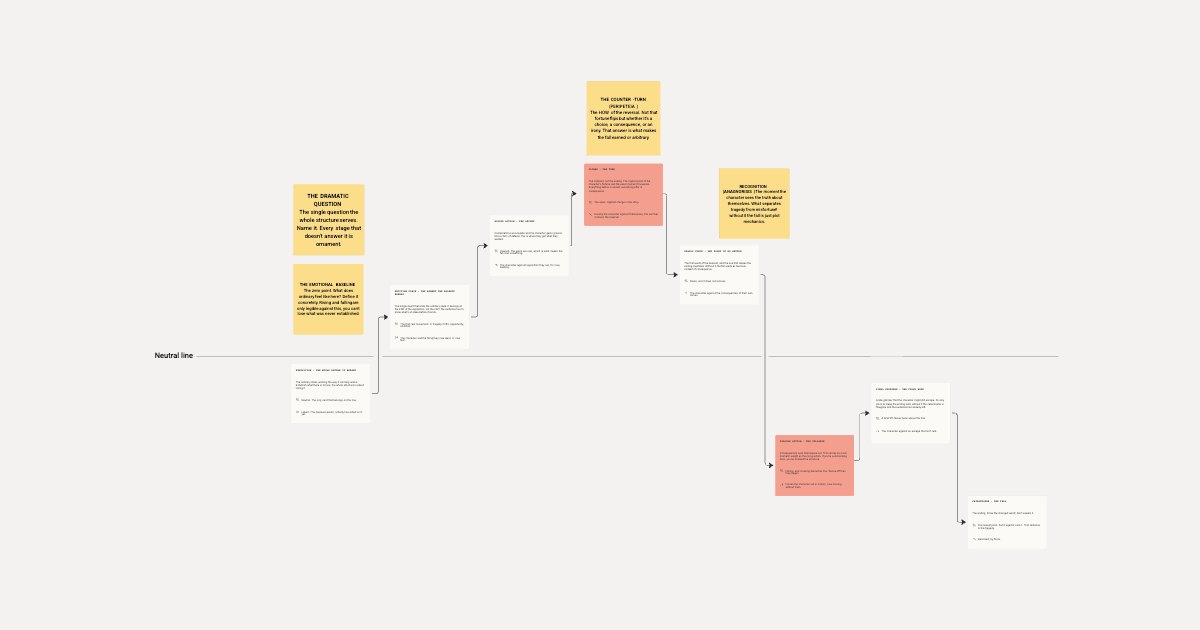
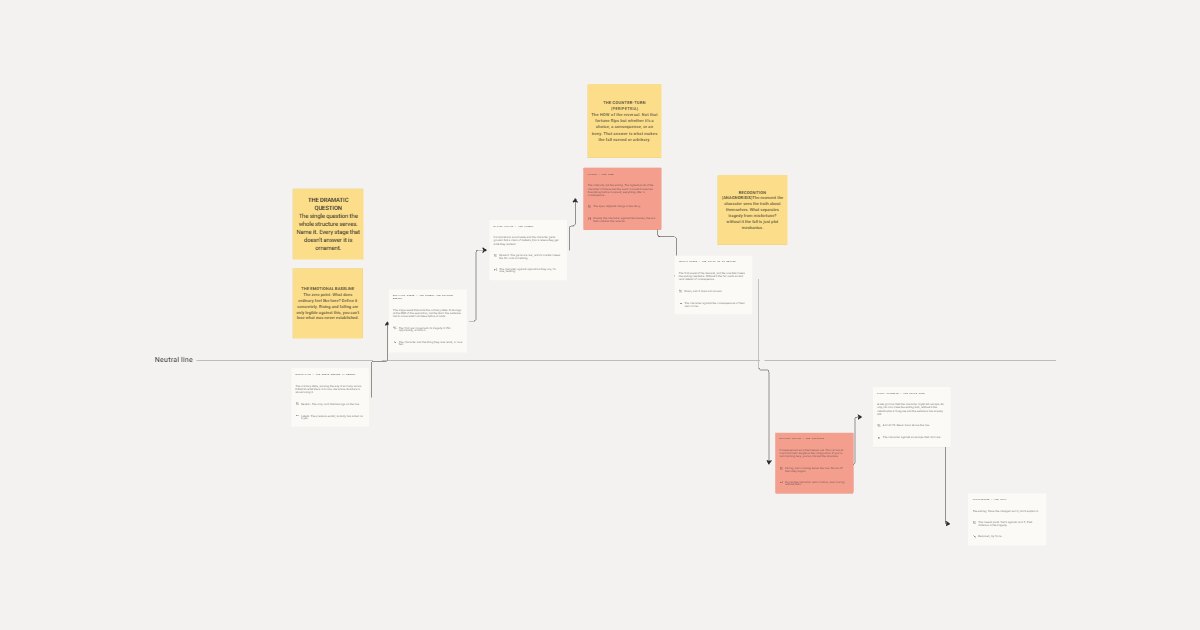
False victory or false defeat — stakes jump, and the protagonist shifts from wanting to needing. Emotional shift: Shift from play to seriousness. Conflict: External — new information or reversal; Internal — senses the true cost ahead. Chapter/pages: (to be assigned) Notes: —
10. Bad Guys Close In
External pressure tightens, internal doubts fracture alliances, and the flaw becomes a liability. Emotional shift: Erosion. Conflict: External — enemies regroup or allies desert; Internal — flaw sabotages progress. Chapter/pages: (to be assigned) Notes: —
11. All Is Lost
The opposite of the Midpoint — real defeat, a death literal or symbolic. Emotional shift: Devastation. Conflict: External — total defeat; Internal — old self destroyed, new self not yet born. Chapter/pages: (to be assigned) Notes: —
12. Dark Night of the Soul
The protagonist mourns, sits in the wreckage, hopelessness before the turn. Emotional shift: Surrender. Conflict: Internal — despair vs. will to continue; External — stillness. Chapter/pages: (to be assigned) Notes: —
13. Break into Three
The A and B stories converge; the protagonist finds the solution and understands what they need, not just what they want. Emotional shift: Revelation. Conflict: Internal — must abandon old worldview; External — urgency remains. Chapter/pages: (to be assigned) Notes: —
14. Finale
The protagonist applies everything learned, confronts the antagonist or antagonistic force directly, and resolves their flaw through action. Emotional shift: Mastery and sacrifice. Conflict: External — final confrontation; Internal — transformation tested under maximum pressure. Chapter/pages: (to be assigned) Notes: —
15. Final Image
The mirror opposite of the Opening Image — proof, on the page, of change. Emotional shift: Arrival. Conflict: Resolved. Chapter/pages: (to be assigned) Notes: —