STORY GUIDE
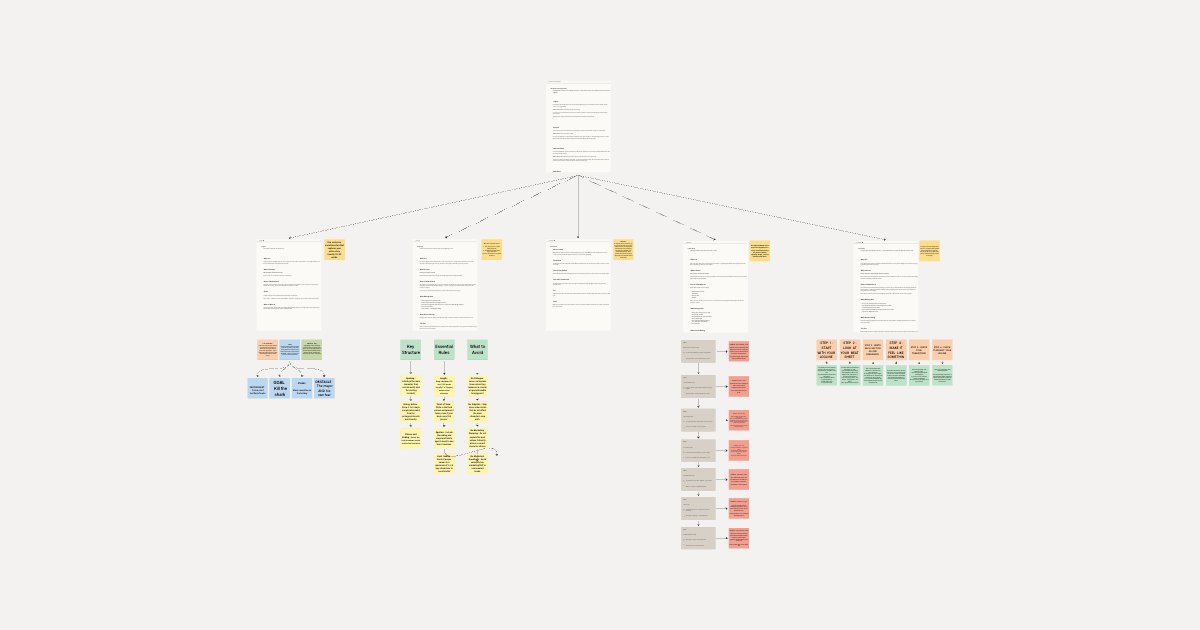
A skeleton for shaping a novel. Fill each section in your own words. Plan freely here; the depth can live on the Plan, this is the spine.
PREMISE
One sentence - who wants what, what's in the way, and why it matters. If you can't say it in a breath, the story isn't focused yet. This is the spine everything else answers to; when a later section drifts from it, one of them is wrong.
THEME
The question the novel is really asking, what it argues underneath the plot. Theme is not a moral stamped on the ending - it is the pressure the story keeps applying, the same question asked in scene after scene until the character has to answer it with a choice.
SYNOPSIS
The whole story, beginning to end, in present tense. Every major turn, no scene-by-scene detail. This is where you find out if the shape holds - if the ending pays off the beginning and the middle earns both. If a turn needs explaining, it hasn't earned its place yet.
CHARACTERS
Who they are, what they want, what they need, the lie they believe, how they change. The want is what they chase; the need is what would actually heal them, and the gap between the two is the story. The lie is what keeps them from the need until the cost of holding it becomes unbearable.
WORLD & SETTING
Where and when it happens, and the rules that shape what's possible. Setting is not scenery - it is pressure. The place should make some choices harder and some impossible, and the reader should feel its weather, its money, and its power before it is ever explained.
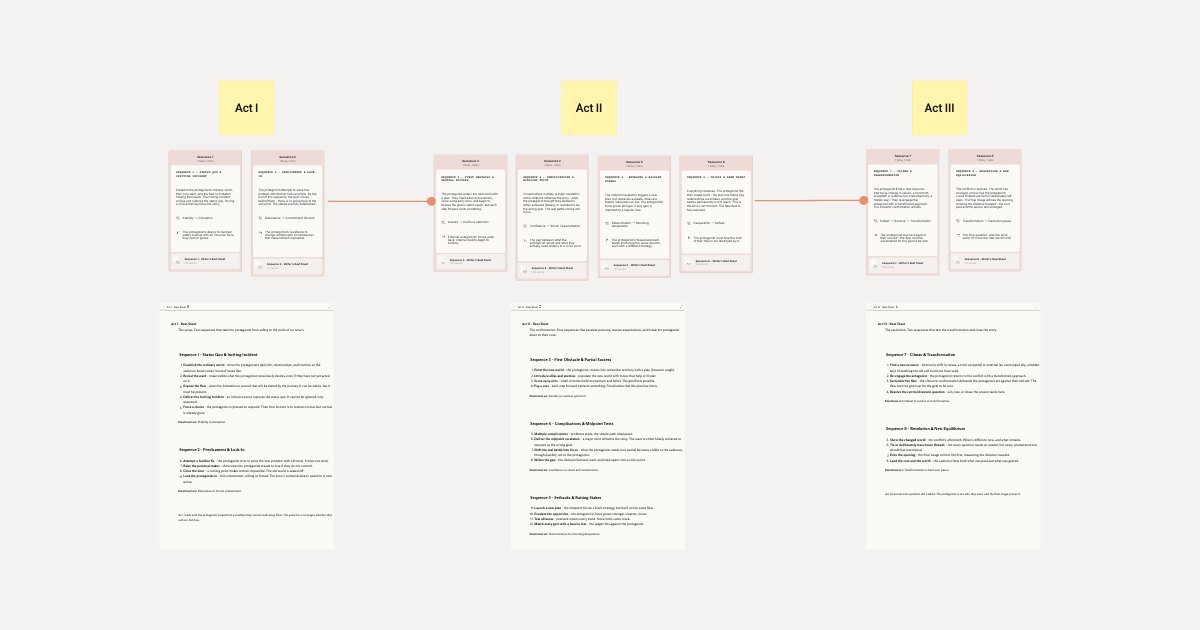
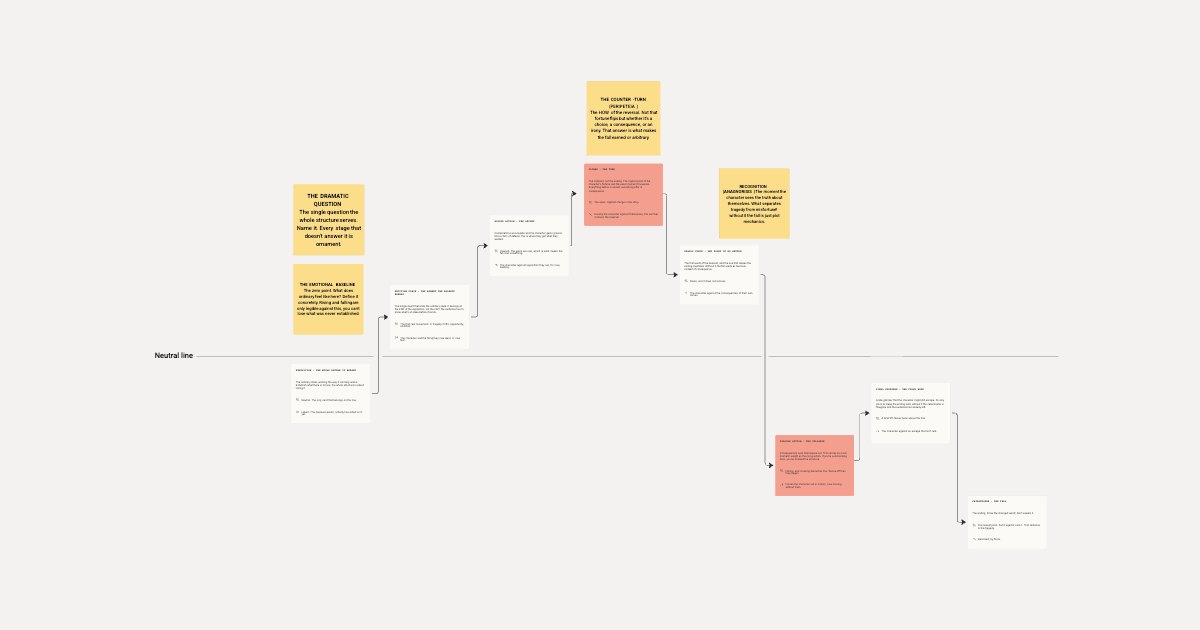
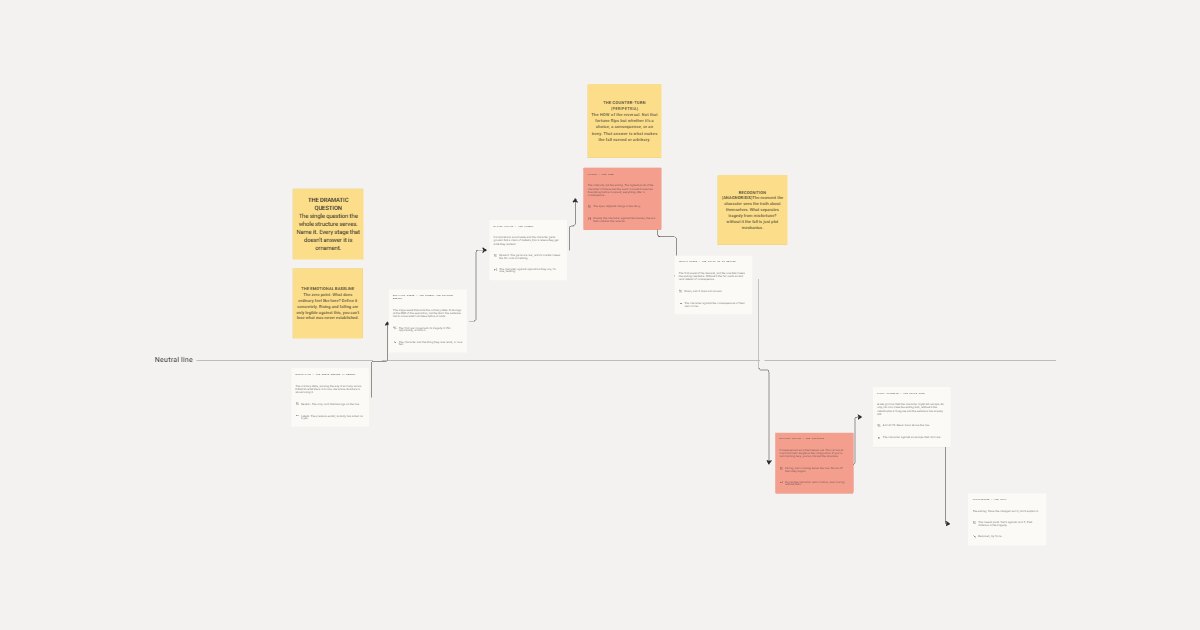
STRUCTURE
The turning points in order, each one causing the next. Group them into acts or parts. Test each beat with "because of this..." - if the next only follows with "and then", the link is broken. If you can cut a turn and nothing downstream changes, it was never structural.
CHAPTER OUTLINE
One line per chapter - whose POV, where it happens, and what has changed by the end of it. A chapter that ends where it began is a scene waiting to be cut or merged. Each one should hand the reader a reason to turn the page.
VOICE & POV
Who tells it, in what person and tense, and how they sound. Voice is the promise you make on page one and keep for four hundred - decide it before you draft, because changing it later means rewriting everything. The narrator's blind spots are as important as what they see.
MANUSCRIPT
Write the prose here. Draft forward, resist polishing as you go - the first draft exists to be finished, not to be perfect.
ESSENTIAL RULES
Point of view: pick a POV and tense and hold it within each scene.
Enter late, leave early: start each scene as close to the change as possible, and cut once the change has landed.
Every scene turns: something must be different by the end - a decision, a revelation, a shift in power - or cut it.
Show the wound, not the backstory: reveal the past only when it drives a present choice.
Cut what the story doesn't need: if removing it changes nothing downstream, remove it.
FINAL CHECKS
Read it aloud. Does each chapter pull into the next, or stop and restart? A pause means a missing transition - write it.
Read the premise, then the synopsis. Same story? If they've drifted apart, one of them is lying - fix it.
Track your character's want and need across the structure. If the need never costs them the want, the arc hasn't happened yet.
STORY GUIDE
PREMISE
One sentence - who wants what, what's in the way, and why it matters.
THEME
The question the novel is really asking. What it argues, underneath the plot.
SYNOPSIS
The whole story, beginning to end, present tense.
CHARACTERS
Who they are, what they want, what they need, the lie they believe, how they change.
WORLD & SETTING
Where and when it happens, and the rules that shape what's possible.
STRUCTURE
The turning points in order - each one causing the next. Group them into acts or parts.
CHAPTER OUTLINE
One line per chapter - whose POV, where, and what changes by the end of it.
MANUSCRIPT
Write the prose here.
VOICE & POV
Who tells it, in what person and tense, and how they sound.
ESSENTIAL RULES
Point of view: pick a POV and tense and hold it within each scene.
Enter late, leave early: start each scene as close to the change as possible.
Every scene turns: something must be different by the end, or cut it.
Show the wound, not the backstory: reveal the past only when it drives a present choice.
Cut what the story doesn't need: if removing it changes nothing, remove it.
FINAL CHECKS
Read it aloud. Does each chapter pull into the next, or stop and restart? A pause means a missing transition - write it.
Read the premise, then the synopsis. Same story? If they've drifted apart, one of them is lying - fix it.