How to Write a Synopsis: Step by Step, With a Real Synopsis Example
How to write a novel synopsis agents want to read, step by step, with a full one-page synopsis example. Plan it in Skrib with the free Story Planning Toolkit.
How to Write a Synopsis: Step by Step, With a Real Synopsis Example
Most writers would rather write another chapter than a synopsis. Squeezing a whole novel into one page feels impossible. It gets much easier once you know what a synopsis is for: to show an agent or editor that your story works, from the first page to the last.
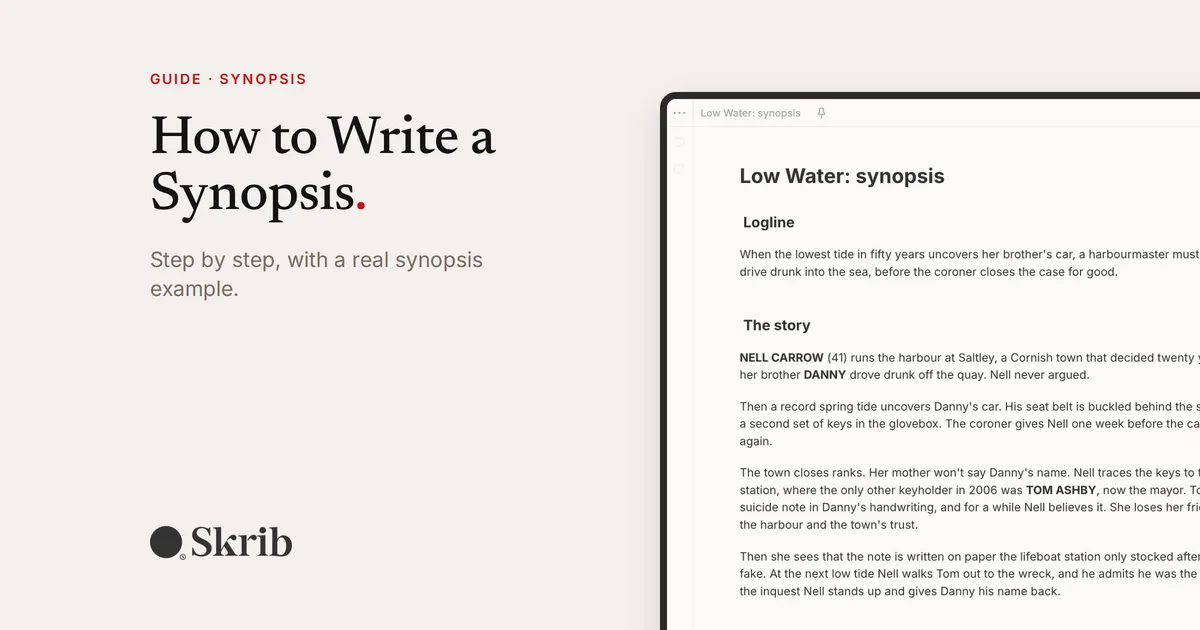
This guide shows you how to write a synopsis in five steps, with a full synopsis example for a mystery novel, Low Water, written in Skrib.

What a synopsis is (and isn't)
A synopsis is a summary of your whole plot, including the ending, in plain language and present tense. It is not a blurb. A blurb hides the ending to sell the book. A synopsis gives it away to prove the book works.
Most agents ask for one page, around 500 words.
Step 1: Write the logline first
One sentence: who, what they want, and what stands in the way.

Do it in Skrib: add a note and pick the Synopsis starting template. Logline, The story and Why it matters are ready to fill in.
Step 2: Introduce the main character and the world
Open with the protagonist in capitals the first time, their situation and what is wrong. "NELL CARROW (41) runs the harbour at Saltley, a Cornish town that decided twenty years ago that her brother DANNY drove drunk off the quay."
Step 3: Tell the plot through the turning points
Follow the big turns only: the inciting incident, the midpoint, the lowest point, the climax. Leave out subplots and minor characters. Each paragraph should move the story forward.
Step 4: Give away the ending
State exactly how it ends and what changes for the main character. In Low Water, the note is a fake, Tom admits he was driving, and Nell gives Danny his name back.
Step 5: Cut to one page
Remove adjectives, dialogue and anything the agent doesn't need to follow the plot. Read it aloud. If you stumble, simplify.
Do it in Skrib: keep the synopsis on the same board as your outline, so when the plot changes you update both in one place.
Where the synopsis sits in your plan
On the Story Planning Toolkit, the synopsis sits next to your logline, characters, structure and world notes, so the one-page version always matches the book:

FAQ
Should a synopsis include the ending? Yes. Always.
First person or third person? Third person, present tense, even if the novel is in first person.
How long should a synopsis be? One page is standard. Some agents ask for two. Follow their guidelines.
Write your synopsis in Skrib
Copy the toolkit, fill in the logline, then write the synopsis beside your plan. It is free to start and takes a minute to set up.
Copy the Story Planning Toolkit/a>