Pantser vs Plotter: Planning Methods That Survive a First Draft
An honest look at the snowflake method, pantser vs plotter, chapter outlines and story bibles, and why most novel planning falls apart by chapter nineteen.
Pantser vs Plotter: Planning Methods That Survive a First Draft
Plotters plan the book before they write it. Pantsers write by the seat of their pants and find the story on the page. Both finish novels. Both also stall, usually around chapter nineteen, when the plan and the draft stop agreeing.
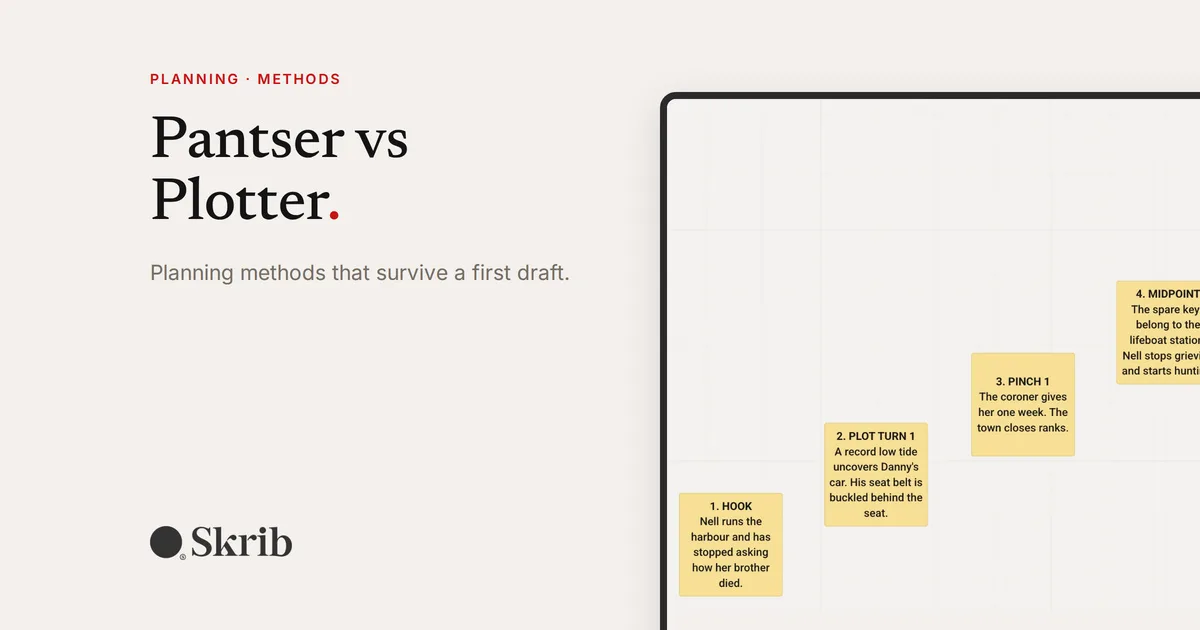
This guide compares the main planning methods and shows how to keep a plan alive through the draft. Our examples come from Low Water, planned on a board in Skrib.
Plotter methods
The snowflake method. Created by Randy Ingermanson, it grows a novel from one sentence to a paragraph, then to character summaries, then to a page per act, then to a scene list. Good for writers who like to expand in layers.
Beat-based structures. A story beat is a moment where something changes. Structures like the 7-point story structure or three acts give you the beats to hit.
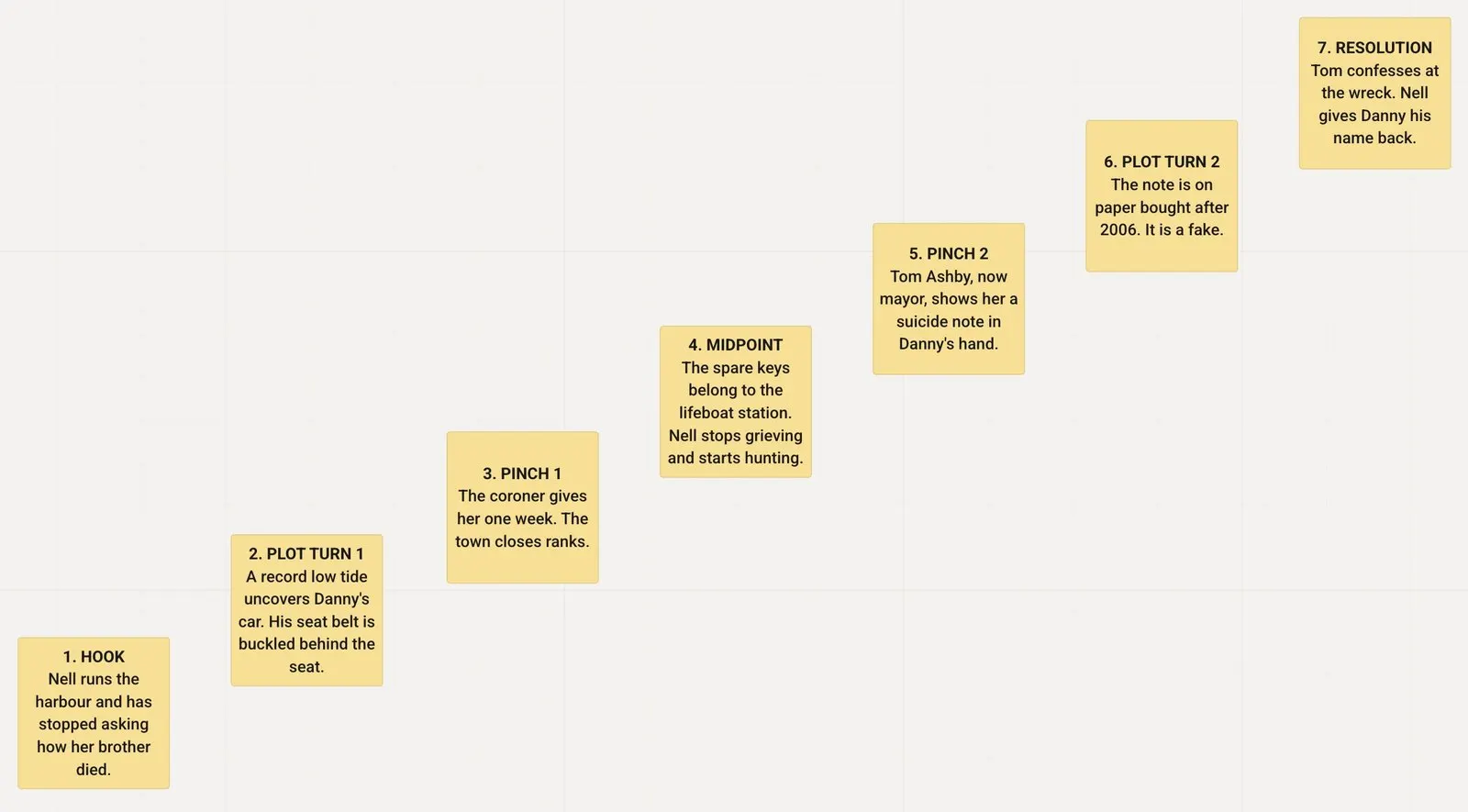
Chapter outlines. One line per chapter, written for the act you are about to draft.
Pantser methods
Pantsers keep a lighter kit: a premise, a character they know well, and a destination. The risk is a tangled middle. The fix is a reverse outline after the draft: list what each chapter actually does, then restructure.
The hybrid that survives
Most writers land in the middle. Plan the premise, the ending and a handful of beats. Draft. Update the plan when the draft teaches you something.
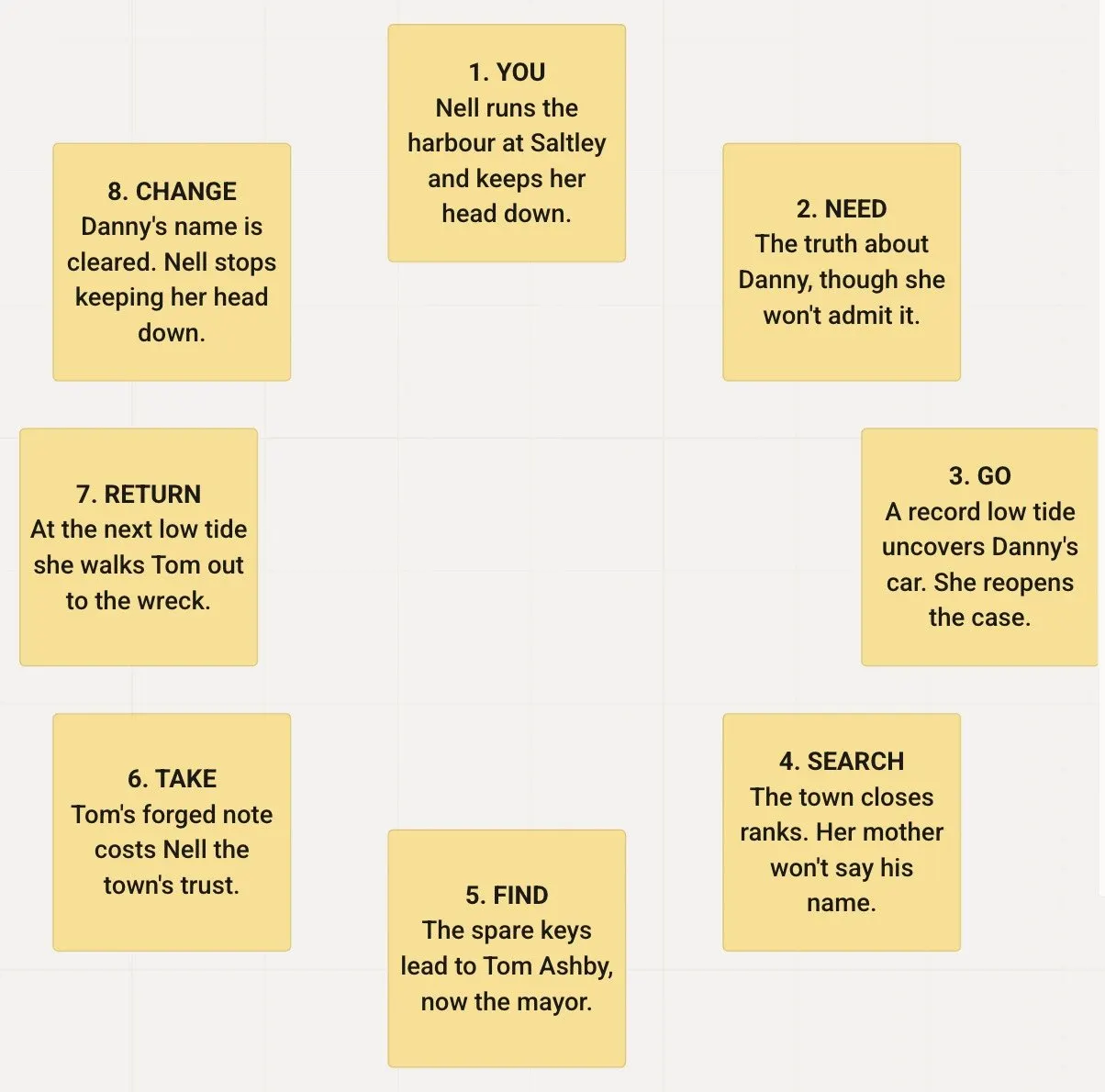
Do it in Skrib: keep the plan on the board and the draft in the same project. Beats you mapped in March are still there in August when chapter nineteen stops working.
Keep a story bible
A story bible holds the facts: characters, places, rules and timeline. It stops you contradicting yourself. See what is a story bible.
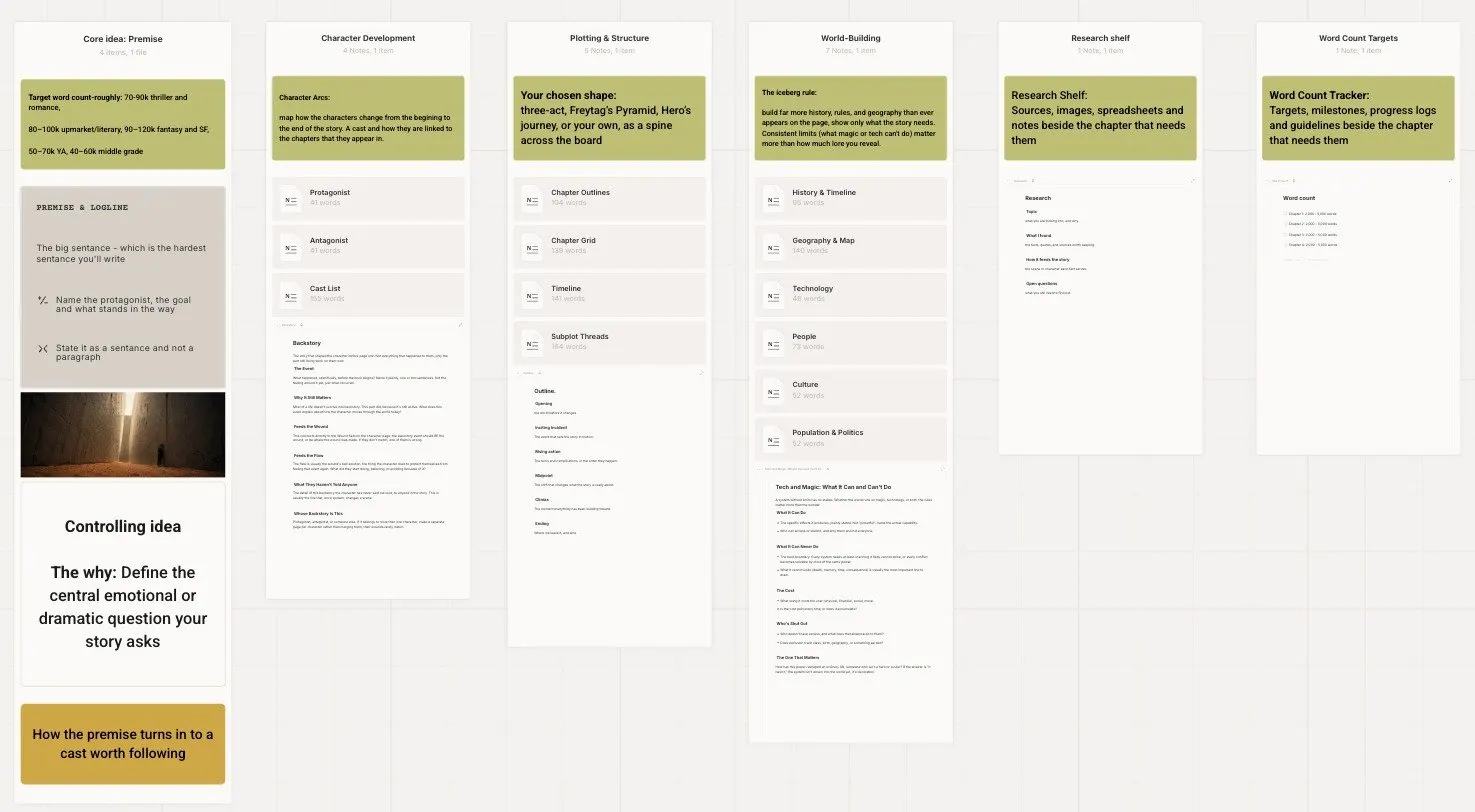
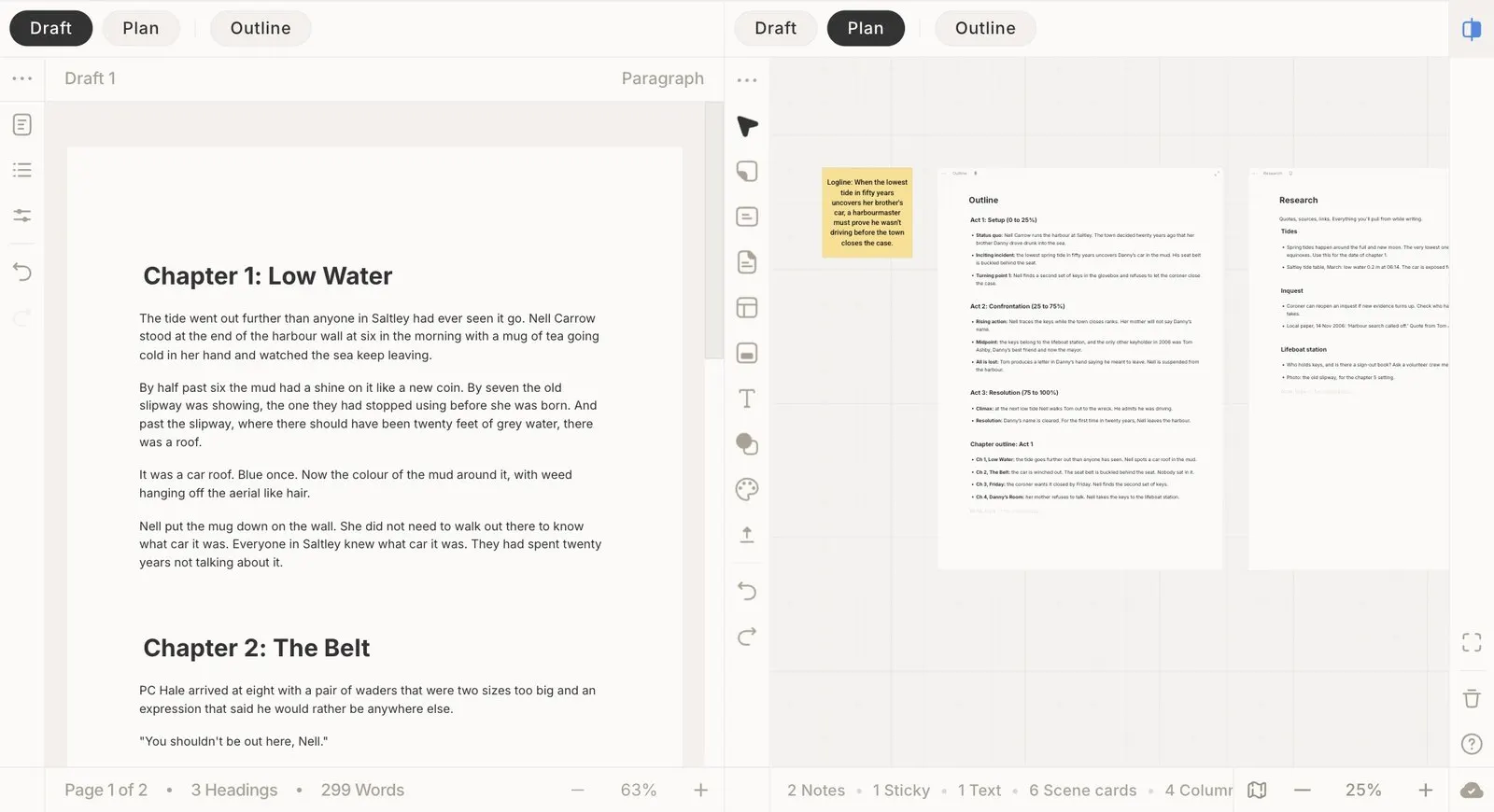
Why plans fall apart, and the fix
Plans die when they live in a different app from the draft. Keep them side by side.
FAQ
Is it better to be a plotter or a pantser? Neither. Use the least planning that gets you to the end.
What is a story premise? One sentence: who wants what, and what stands in the way.
Plan your way in Skrib
Copy the toolkit and pick the planning method that suits you.
Copy the Story Planning Toolkit
New to Skrib? Create your account.