How to Find a Literary Agent: Query Letters, Synopses and Manuscript Format
How agents are found and researched, what goes in a query letter and a one-page synopsis, standard manuscript format specifics, and query versus proposal.
How to Find a Literary Agent: Query Letters, Synopses and Manuscript Format
To sell a novel to a traditional publisher, most writers need a literary agent first. You find one by researching agents who represent your genre, then sending a query letter, and often a synopsis and sample pages.
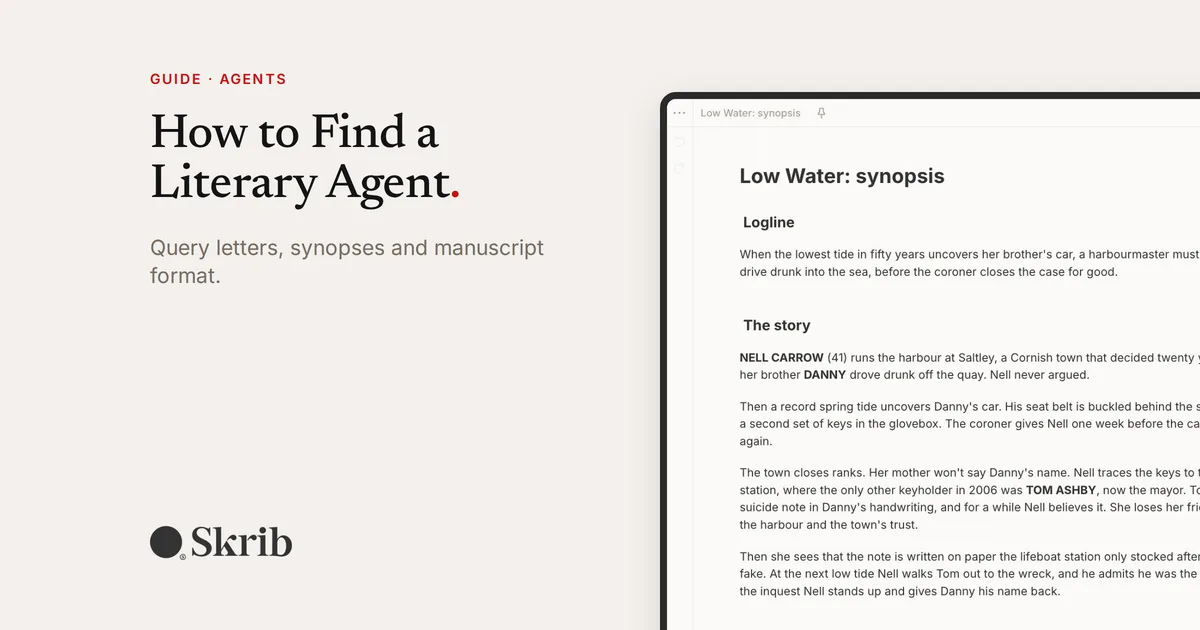
This guide covers each piece, in order. We keep the query, synopsis and manuscript for our mystery Low Water together in one project in Skrib.
Step 1: Finish the book first
For fiction, agents expect a finished, revised manuscript before you query. Nonfiction is different: you sell it on a book proposal.
Step 2: Research agents
Look for agents who represent your genre and are open to queries. Useful places: the acknowledgements of comparable books, agency websites, and databases such as QueryTracker and Publishers Marketplace. Read each agent's submission guidelines and follow them exactly.
Step 3: Write the query letter
A query letter is one page with three parts:
- The hook: your logline, or a short paragraph on the story.
- The book: title, genre, word count and one or two comparable titles.
- You: a short bio, with relevant credits if you have them.

Do it in Skrib: write the query in a note on the same board as your plan, so the pitch matches the book.
Step 4: Write a one-page synopsis
A synopsis tells the whole plot, including the ending, in plain present tense. One page is standard. See our synopsis guide.

Step 5: Use standard manuscript format
Unless an agent says otherwise:
- 12 point, a plain serif font such as Times New Roman
- Double-spaced, 1 inch margins
- First line of each paragraph indented half an inch
- Your name, title and page number in the header
- Each chapter starts on a new page
Query vs proposal
Fiction is sold with a query and the finished manuscript. Nonfiction is usually sold with a book proposal: an overview, chapter outline, market analysis and sample chapters.

FAQ
How many agents should I query? Send in small batches of five to ten, and revise the query if nothing comes back.
Do agents charge a fee? Reputable agents don't charge reading fees. They earn a commission when they sell your book.
Keep your submission package in Skrib
Copy the toolkit for your logline and synopsis, and keep the query beside the book.
Copy the Story Planning Toolkit
New to Skrib? Create your account.