Tropes: A List Writers Can Use Without Writing a Cliché
What a trope is, how it differs from a cliché, and a trope list by type: character, romance, fantasy and plot tropes, each with one way to make it feel fresh.
Tropes: A List Writers Can Use Without Writing a Cliché
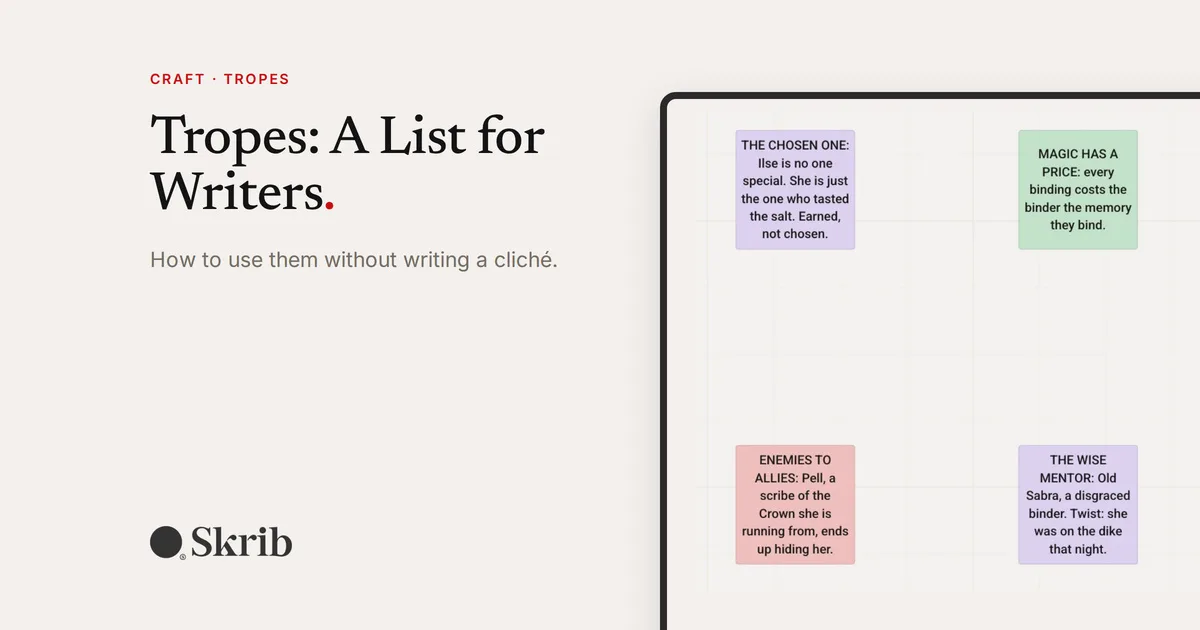
Readers search for books by their tropes: enemies to lovers, found family, the chosen one. Tropes sell. Clichés don't. This trope list is for writers, not readers. It explains what a trope is, how it turns into a cliché, and gives common tropes by type, each with one way to make it feel fresh. We tag the tropes in our fantasy novel The Salt Crown on a board in Skrib.

What is a trope?
A trope is a familiar pattern in a story: a type of character, relationship, plot or setting that readers recognise. Enemies to lovers is a trope. So is the wise mentor, the heist and the haunted house. Tropes are not bad writing. They are shorthand that tells readers what kind of book they are holding.
Trope vs cliché
A cliché is a trope, a phrase or an image used so often, with so little change, that it stops working. The reader sees it coming and skims.
Cliché examples in writing:
- The story opens with the character waking up and looking in a mirror.
- "It was a dark and stormy night."
- It was all a dream.
- The villain explains the whole plan before trying to kill the hero.
- Love at first sight, with no reason given.
The fix is almost never to drop the trope. It is to add one specific change that belongs to your story.
How to tag your tropes
List every trope your book uses, then write one line on what you changed. If you can't write the line, that trope is at risk of becoming a cliché.

Do it in Skrib: add a sticky card for each trope on your plan and colour it by type. At a glance you can see which tropes you use, where, and whether each one has a twist.
Character tropes
| Trope | Make it fresh |
|---|---|
| The chosen one | Make them earn it, or make the prophecy wrong. |
| The wise mentor | Give the mentor a secret, a flaw or a stake in the outcome. |
| The reluctant hero | Make the reason they refuse specific and personal. |
| The morally grey antihero | Show the line they will not cross, then test it. |
| The villain who thinks they're the hero | Give them a want the reader half agrees with. |
For building the characters under the trope, see how to create a character.
Romance tropes
| Trope | Make it fresh |
|---|---|
| Enemies to lovers | Give them a real conflict of interest, not just a bad first meeting. |
| Fake dating | Make the fake relationship cost each of them something real. |
| Second chance | Make the reason they split still true now. |
| Forced proximity | Make the shared space matter to the plot, not just the kiss. |
| Grumpy and sunshine | Let the sunny one have a hard edge too. |
| Slow burn | Keep something changing in every scene, even if they don't touch. |
In our romance Second Helpings, the rivals are a cafe owner and the baker across the road who wants her lease. The trope is rivals to lovers. The twist is that the lease, not a misunderstanding, keeps them apart.

Plan the beats with the Save the Cat beat sheet for novels.
Fantasy tropes
| Trope | Make it fresh |
|---|---|
| The dark lord | Give them a reason the world half needs them. |
| The quest | Make the thing they seek not what they thought. |
| The magic school | Make the school want something from its students. |
| The prophecy | Let characters misread it, or fight over what it means. |
| Magic has a price | Make the price personal to the hero, not general. |
In The Salt Crown, magic is salt that holds memory, and every binding costs the binder the memory they bind. The price is the plot. See our worldbuilding checklist for the questions behind a magic system.
Plot tropes
| Trope | Make it fresh |
|---|---|
| The heist | Let the plan fail early and make them improvise. |
| The ticking clock | Tie the deadline to what the character fears most. |
| The mentor's betrayal | Plant the reason early, so it feels earned, not random. |
| The fish out of water | Let the outsider be right about something the insiders miss. |
| The hidden history | Reveal it in pieces, each one changing what we thought we knew. |
FAQ
Are tropes bad in writing? No. Every story uses them. Readers look for books by trope. The problem is only the trope with nothing new in it.
How many tropes should a book have? There's no rule. Most books use several. What matters is that each one has a reason to be there and one specific change.
What are the most common tropes? In romance: enemies to lovers, second chance and fake dating. In fantasy: the chosen one, the quest and the mentor. In every genre: found family.
Map your tropes in Skrib
Copy the Story Planning Toolkit, add a card for each trope, and write its twist beside it before you draft.
New to Skrib? Create your account.